
The ROI at a Glance
- Maximized Time-on-Site (TOS): Google Analytics confirmed a massive spike in user retention, keeping cold traffic engaged for minutes rather than seconds.
- Zero-Touch Operations: Engineered a headless CMS pipeline with automated webhooks, completely removing the client from the deployment and build process.
- High-Performance Interactivity: Achieved a 90+ Lighthouse score despite a deeply complex, state-heavy UI by utilizing edge-rendered HTML and resumable JavaScript.
- Qualified Traffic Routing: Successfully bridged the gap between brand storytelling and direct-response commerce via seamless Shopify integration.
1. Executive Summary: The Bounce Rate Crisis
In the modern digital landscape, the standard grid-based e-commerce store is a leaky bucket. Customer Acquisition Cost (CAC) is at an all-time high, yet standard e-commerce UX dictates that if a user isn't immediately ready to purchase, they bounce within 5 to 10 seconds.
For the Bonus Pool brand, operating in the highly competitive lifestyle and music sector, a standard catalog was insufficient. They did not just need a store; they needed an Attention Arbitrage Engine.
The mandate was to build a digital "playground"—a highly sticky, gamified top-of-funnel environment that users would actively want to explore. By holding their attention through nostalgia and interactive media, we could organically warm up cold traffic before routing them to the integrated Shopify storefront for conversion. However, this level of interactivity typically destroys website performance, creating a severe engineering bottleneck.
2. The Operational & Technical Bottlenecks
To execute this marketing strategy, the system had to overcome three distinct constraints:
Constraint 1: The "Heavy UI" Performance Tax
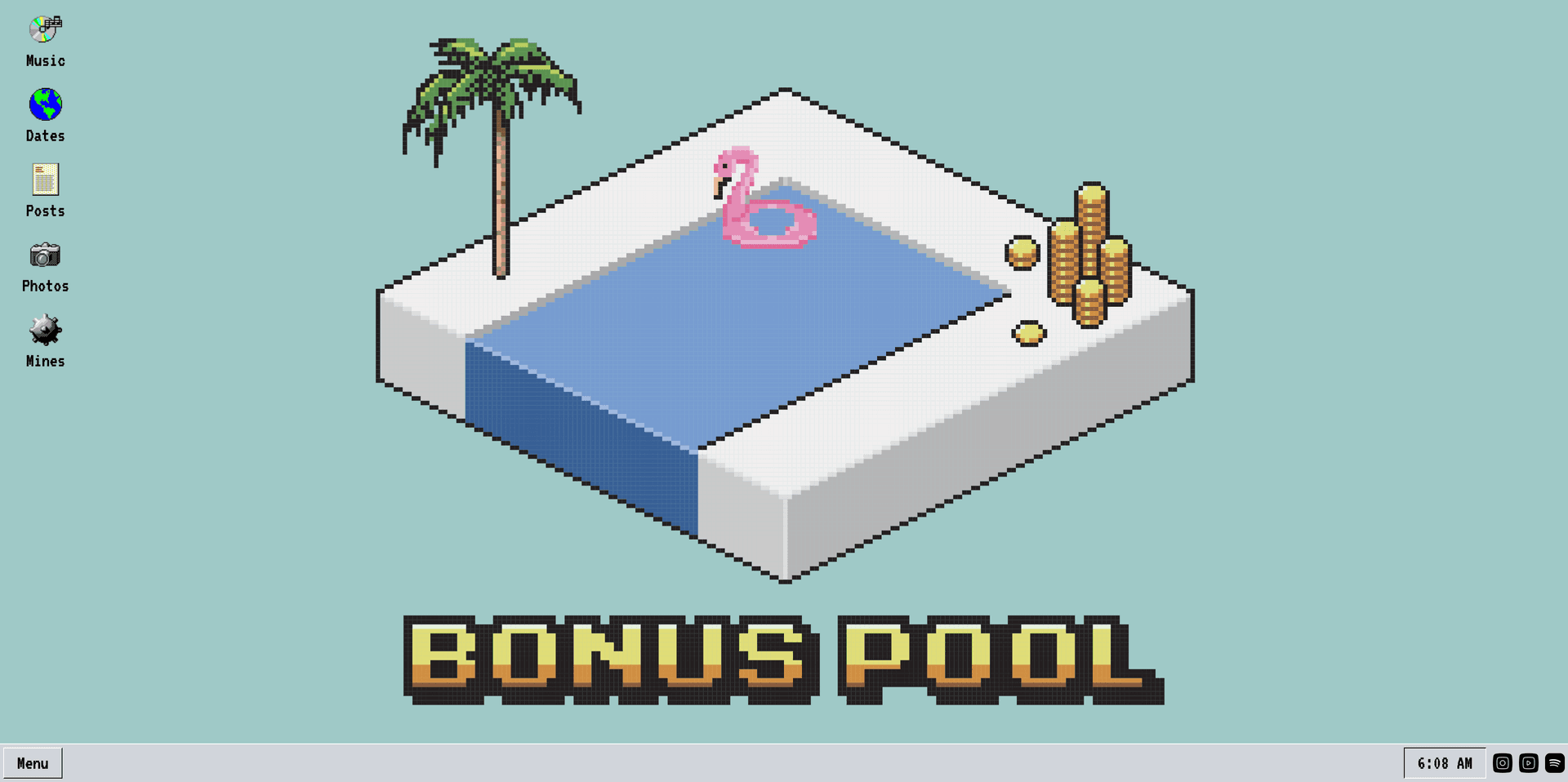
Building an interactive "Web OS" mimicking a classic Windows 98 desktop requires massive DOM manipulation. Users are dragging windows, opening classic photo galleries, and triggering z-index changes. In a standard React architecture, this requires a massive JavaScript bundle to download and "hydrate" before the site becomes interactive.
- The Threat: A 3-second delay in interactivity would break the illusion, ruin the user experience, and obliterate SEO rankings, entirely defeating the purpose of the marketing funnel.
Constraint 2: The E-Commerce Audio Gap
Because music streaming was a core engagement hook, the audio player had to persist.
- The Threat: In standard multi-page architectures, navigating to the "Store" or reading a "Post" kills the audio stream, disrupting the user's engagement loop and causing immediate friction.
Constraint 3: The Content Publishing Chokehold
The brand continuously releases new tour dates, media, and photo galleries.
- The Threat: Relying on a developer to manually update the codebase or trigger site builds every time a new photo is added is an unacceptable administrative bottleneck. The system had to run itself.
3. The Architecture of Engagement
To solve these constraints, I architected a headless, edge-rendered platform that disguised a highly sophisticated marketing funnel behind a nostalgic, pixel-perfect retro interface.
Module A: The "Sticky" Top-of-Funnel
Rather than dropping users onto a product page, they are dropped into an OS desktop. By engineering interactive features—such as a functional Minesweeper clone, a persistent background audio engine, and a classic Windows 98-style photo gallery—we fundamentally hacked standard user behavior.
Google Analytics data immediately validated the architecture: Time-on-Site (TOS) skyrocketed. Users were actively exploring, playing, and consuming brand media, transforming from cold clicks into a highly engaged audience with deep brand affinity. Once warmed up, strategic UI routing funneled them directly to the primary Shopify checkout.
Module B: Zero-Latency Edge Rendering (Qwik)
To ensure the heavy UI didn't penalize load speeds, I abandoned standard hydration models and utilized the Qwik framework.
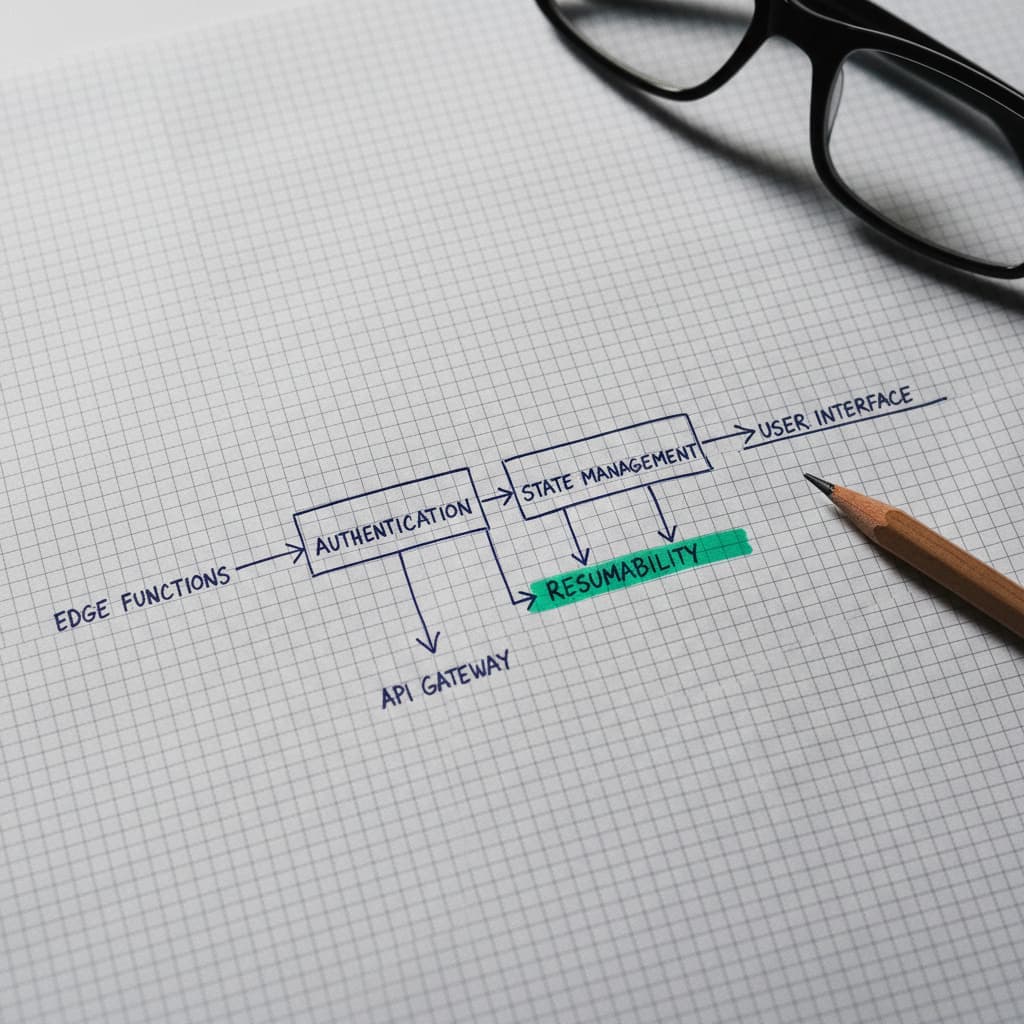
Qwik is "resumable." I serialized the complex application state (window coordinates, open apps, audio state) directly into the initial HTML payload delivered via Netlify Edge Functions. When a user loads the page, the OS is interactive instantly. The JavaScript required to drag a window is only downloaded at the exact millisecond the user clicks the window. This lazy-loading-on-interaction slashed our initial bundle size and secured a 90+ Lighthouse performance score.
Module C: The Zero-Touch Publishing Pipeline
To entirely remove the administrative burden from the client, I engineered a headless architecture utilizing Sanity CMS.
I decoupled the data from the UI and instituted a strict schema. To ensure the site was always fresh, I built automated webhook listeners. When the client uploads a new photo gallery or adds a tour date in the Sanity dashboard, the webhook instantly pings the deployment server, automates the build, and invalidates the edge cache.
Furthermore, the Edge Functions utilize custom GROQ queries to dynamically filter out expired tour dates before the HTML is rendered. The system cleans its own data.
4. The Business Impact
By treating the website as a psychological engagement tool rather than a static document, the Bonus Pool platform successfully disrupted the standard e-commerce bounce rate.
- Captured Attention: The gamified UI and retro photo galleries proved highly effective, keeping users on the platform significantly longer than industry averages.
- Frictionless Conversions: The persistent audio engine and seamless Shopify integration meant users could consume brand media while shopping, drastically reducing funnel friction.
- Automated Operations: The zero-touch publishing pipeline empowered the client's marketing team to update the entire platform instantly without ever touching a line of code or relying on an engineering team.
This project proves that when you combine deep behavioral psychology with bleeding-edge web architecture, you stop renting attention and start owning it.
Are your marketing campaigns leaking money due to high bounce rates and rigid e-commerce templates? Let's engineer a bespoke engagement funnel. Book a Technical Audit to explore how custom interactivity can maximize your Time-on-Site and conversion rates.